Using Citizen Science with local communities to address environmental risk is an approach attracting considerable interest and is expected to be the subject of a webinar in the Autumn 2026. This publication, co-authored by LDnet members Joanna Storie and Ghieth Alkhateeb, is an example of the growing number of research contributions in this field.
Citizen science contributions to environmental risks assessment and management: A systematic map and qualitative evidence synthesis
Authors
Abstract
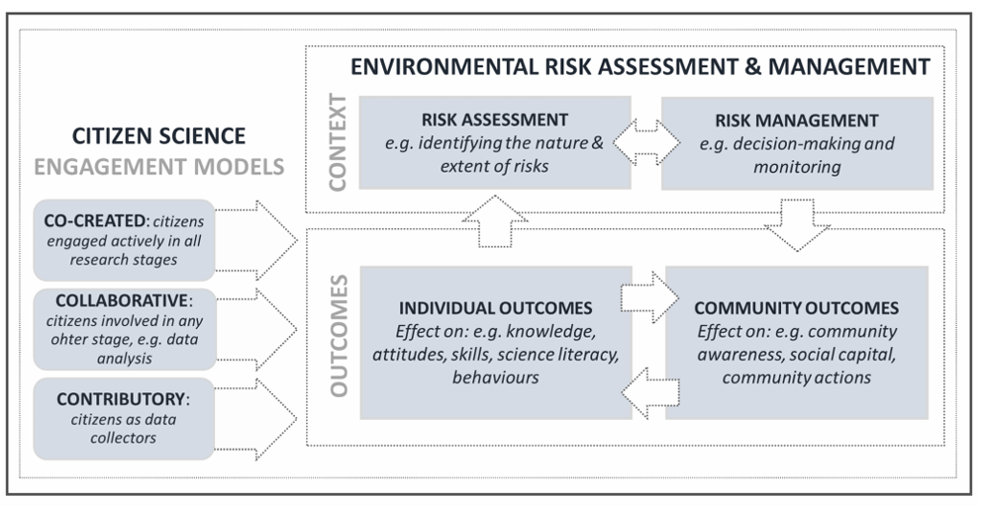
In an era of systemic risks from natural and human-induced hazards, we need approaches that address such risks at different governance levels, including those at the community level. Citizen science (CS)-public participation in research-is one such approach that has the potential to benefit risk assessment and management. Building on systematic evidence synthesis methodologies, we examine the individual and collective benefits from CS to environmental risk assessment and management. From systematic search results (9277 records), we found 133 publications dealing with the topic in-depth. Results show that CS is increasingly being recognised for risk assessment and management and several individual-level benefits (e.g., improved scientific skills) support outcomes for communities (e.g., increased community capacity). Identified knowledge gaps include (i) unidentified potential of CS for different risk governance phases, and (ii) scattered evidence of CS community outcomes in different geographic regions. We conclude that CS can increase resilience amongst vulnerable communities.
To read the full paper click HERE.

Leave a Reply
You must be logged in to post a comment.