• Home
  • About
    • What is LDnet?
    • LDnet Board
    • Join LDnet
    • LD Who’s Who
    • LD Organisations
      • Pactes Locaux
      • World Bank
      • ITC-ILO
      • FARNET
      • ENRD
      • OECD
      • URBACT
      • ELARD
    • Guidance for registered authors to the LDnet website
    • Register to the site to become a contributor
    • Personal data policy
  • Events
    • LDnet events & activities
    • Other LD events & activities
  • Publications
    • LDnet Articles
    • LD Books & Studies
    • LD Evaluations
    • The Local Development Ebook
  • Programmes
    • EU LD Policies & Programmes
    • CLLD
    • FARNET
    • LEADER
    • URBACT
    • Other LD Policies & Programmes
      • International LD programmes
      • LD Policies & Programmes by Country
  • Webinars
  • Resources
    • CLLD in Europe
    • CLLD country profiles
    • LDnet Webinars
    • LDnet Ebook
    • LD Handbooks
    • LD Good Practices
      • LD Practices by Country
    • LD References [Bibliography]
    • LD Glossary
  • Contact Page

LDnet

Local Development Network

  • CLLD
  • Rural
  • Urban
  • Jobs
  • Social Inclusion

The new LEADER added value

The transnational LEADER cooperation project “OUR COMMON FUTURE”, involved LAGs from Austria, Luxembourg, Portugal, Bulgaria together with associated LAGs from Sweden, Finland, Italy, France, Spain, Croatia, Estonia, Latvia and Romania. Lead partner was the LEADER-forum Austria.

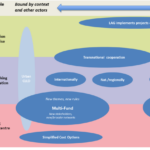
The project set out—building on more than 30 years of successful LEADER/CLLD as a participatory approach to urban and regional development—to develop fresh future perspectives and to explain why the LEADER approach, as a citizen-centred policy tool, is especially relevant now. How can we reach people—particularly in rural areas—more effectively again and increase acceptance of the need for change? For Local Action Groups (LAGs), it will become even more important to build new skills for intermediary management at key social interfaces. These include, for example, the public–private interface and the strategy–practice interface, both of which require competent innovation management.

The project concluded in August 2025 and its final report, entitled “THE NEW LEADER ADDED VALUE” is now available.

The report was written by Wolfgang Berger, Robert Lukesch, Stefan Kah, Magda Porta, Petri Rinne, and Anette Peiter.

It comprises an Executive summary and six sections corresponding to the work packages of the project:

  1. Innovative LEADER approaches in the EU – Stefan Kah
  2. Experiences of LAGs outside the EU – Petri Rinne
  3. Long-term financing and policy frameworks (LEADER: Where it came from and what it still offers) – Robert Lukesch
  4. New communication approaches – Anette Peiter
  5. Shared European themes – Magda Porta
  6. The new LEADER added value (Conclusions from the project) – Wolfgang Berger

To read the report click below.

  • THE NEW LEADER ADDED VALUE - FINAL REPORT

For a fuller presentation of the conclusions of the project click below.

  • OUR COMMON FUTURE - PROJECT CONCLUSIONS - NEW TASKS FOR LAGs

Filed Under: LD Books & Studies, Publications Tagged With: Leader LDnet

About LDnet

The European forum for sharing information and knowledge among experts, researchers and practitioners in local development.

Leave a Reply Cancel reply

You must be logged in to post a comment.

This site uses Akismet to reduce spam. Learn how your comment data is processed.

  • Bluesky
  • E-mail
  • LinkedIn
  • Twitter

Get Involved with LDnet

  • Support LDnet
  • Join LDnet
  • Partner & Expert Search
  • Register to the site to become a contributor

Email Newsletter

Sign up to receive email updates and to hear what's going on with LDnet!

Personal data policy

Popular Tags

Capacity building Climate Change Adaptation CLLD Coastal Cohesion policy Community development Community involvement Endogenous growth Entreprenurship ESIF EU funds EU policies Evaluation Finance Financial engineering Fisheries Governance innovation Integrated approach Jobs Leader LEI Local development Local development approach Local development strategy Local economy local governance Participation Partnerships Place-based development Regeneration Research Resilience Rural Rural Communities SMEs Social economy Social inclusion social innovation Sub-Saharan Africa Sustainable Development Territorial approaches Third sector Third system Urban

About LDnet

LDnet is an informal network set up in 2011 to bring together knowledge and people in local development. People who wish to make a contribution to local development can participate in the network. LDnet is supported by the non-profit European Local Development Network Association (taking over this role from the LEDA-Partenariat Association). … read more

Become a Contributor

  • Join LDnet
  • Register to the site to become a contributor

Contributors

avatar for
avatar for
avatar for
avatar for
avatar for
avatar for
avatar for
avatar for
avatar for
avatar for
avatar for
avatar for
avatar for
avatar for
avatar for
avatar for
avatar for
avatar for
avatar for
avatar for
avatar for
avatar for

© 2011–2026 LDnet · Log in · Join LDnet · Register to the site to become a contributor · Personal data policy